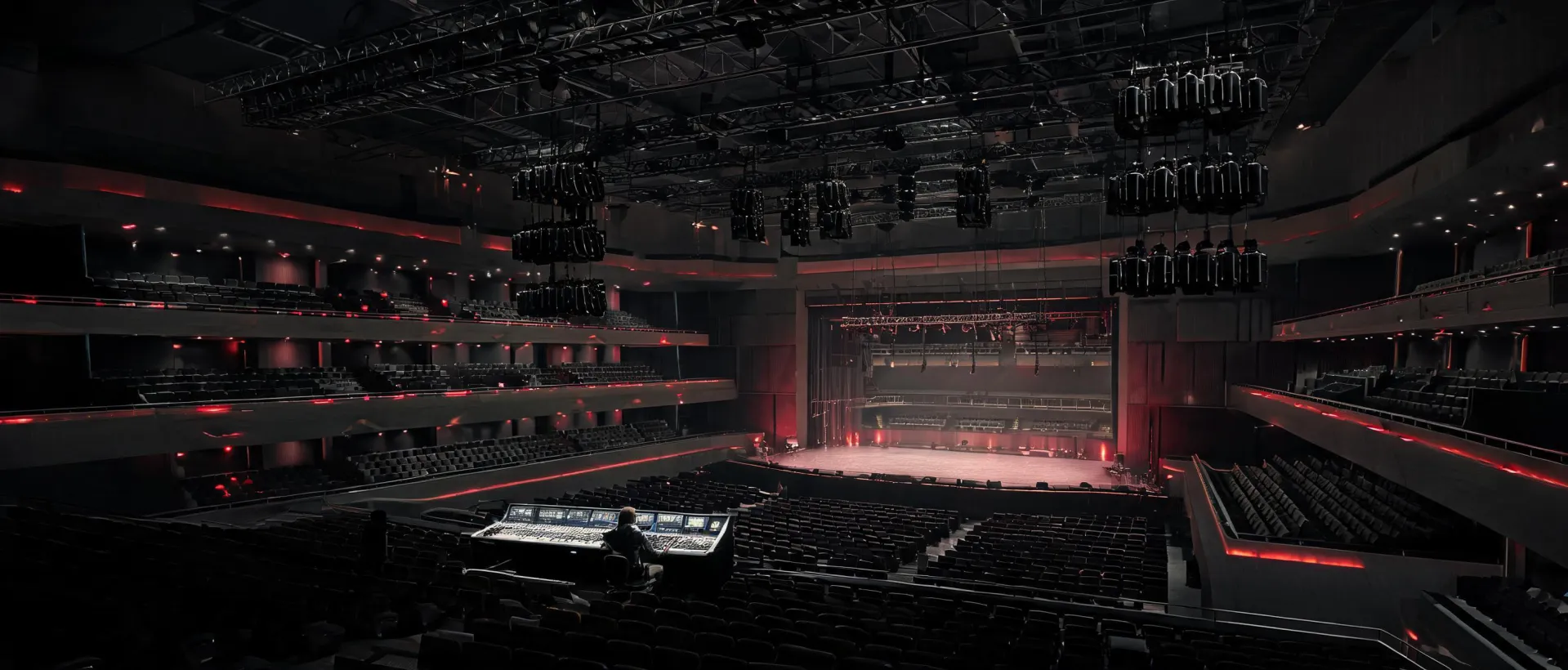
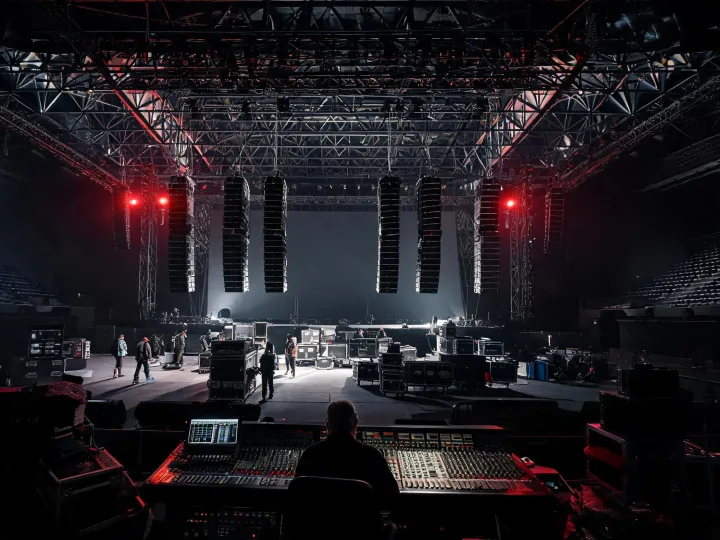
System design for touring, installation, cinema and performance venues Discuss a venue brief
Professional sound systems across live and installed venues
Venue solutions

Martin Audio design priorities change with the room and the operating model

Live sound, worship, cinema, hospitality, education and corporate spaces may use related loudspeaker technologies, but their acceptable compromises are different. Start with the venue's definition of a successful day.

Compare venue priorities
Application matrix

Six environments, each with a different failure mode

These cards describe the design tension as well as the desired outcome. Final performance depends on verified room data, qualified rigging, appropriate amplification and on-site commissioning.

Touring concert sound system01 / LIVE

Live sound & touring

Fast rigging and repeatable files matter, but venue geometry still changes. A compact array may save truck space while reducing low-frequency headroom or long-throw control; a larger system increases logistics and roof load.

Verify
Trim, splay, weight, weather exposure
Trade-off
Inventory efficiency vs venue-specific optimisation
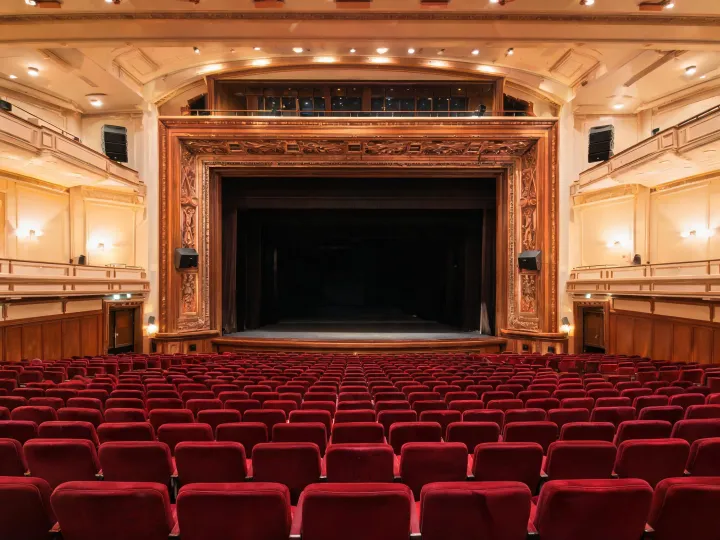
Installed loudspeakers in a theatre02 / VENUE

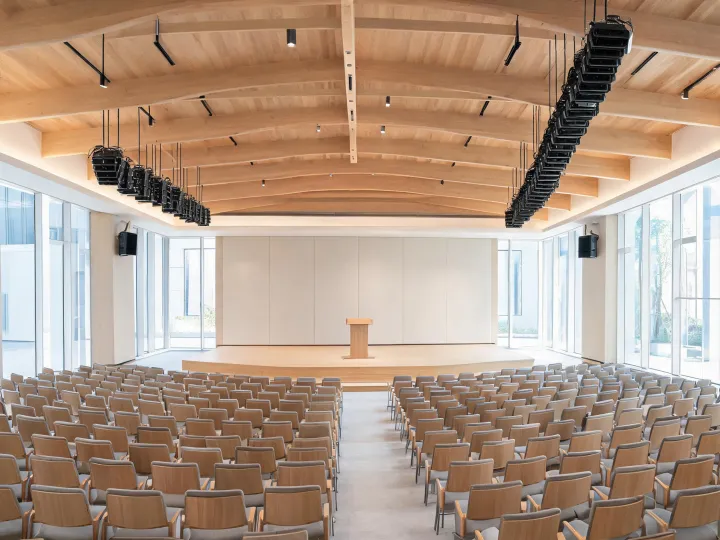
Performing arts venues

Speech, orchestral reinforcement and amplified productions can pull voicing in different directions. Architectural integration and balcony coverage may limit ideal positions, making fill strategy and preset governance important.

Verify
Balcony shadow, sightline, service access
Trade-off
Visual discretion vs directivity and headroom
House of worship audio installation03 / WORSHIP

Worship & community

High speech intelligibility must coexist with music, volunteer operators and reflective architecture. A highly adjustable system is useful only when routine operation remains understandable and protected from accidental changes.

Verify
Speech transmission, zone delay, preset access
Trade-off
Control depth vs everyday simplicity
Cinema auditorium sound installation04 / CINEMA

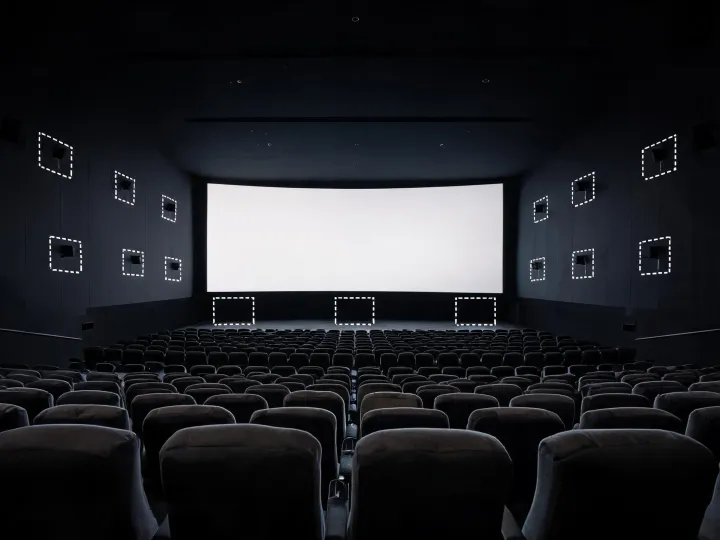
Cinema

Screen loss, channel localisation and low-frequency uniformity shape the result. More subwoofer output does not automatically improve consistency; position, room modes, processing and calibration all influence seat-to-seat response.

Verify
Screen attenuation, reference level, bass distribution
Trade-off
Extension and impact vs spatial consistency
Hospitality venue with integrated sound05 / HOSPITALITY

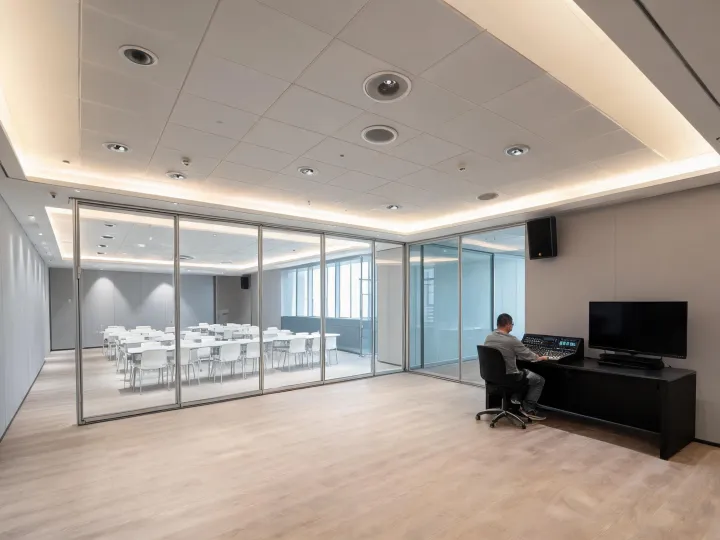
Hospitality & retail

Distributed sound often shares space with architecture, neighbours and multiple room modes. The design may prioritise consistent moderate level, zoning and unobtrusive hardware over concert-scale peak output.

Verify
Boundary noise, zone control, mounting access
Trade-off
Low visual impact vs serviceability
Corporate auditorium sound system06 / CORPORATE

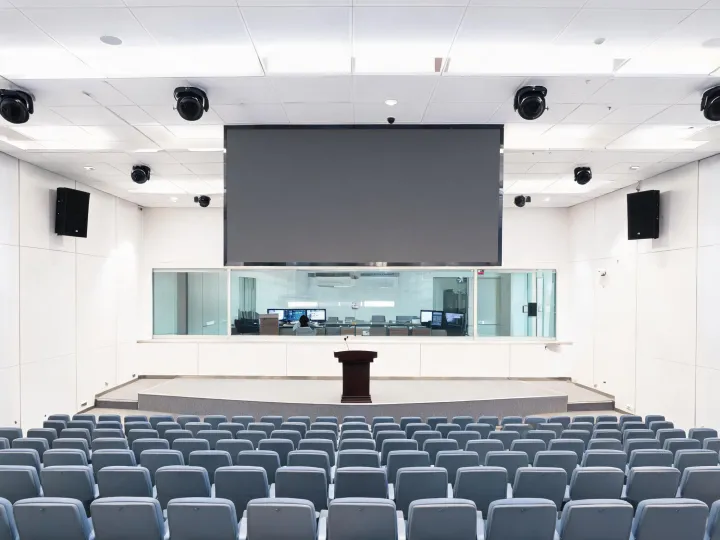
Corporate & education

Speech coverage, echo control and remote participants define usability. Microphone strategy and room acoustics can be more decisive than loudspeaker power, while IT ownership affects monitoring and support response.

Verify
Gain before feedback, latency, network responsibility
Trade-off
Unified AV control vs specialist audio access
6venue variables captured
3evidence layers: model, measure, listen
2limits stated: acoustic and operational
1shared acceptance record
No generic room

Describe the venue that actually exists

Send the plan, section, seating state, rigging limits, acoustic treatment status and normal program use. If the data is preliminary, identify which dimensions still need survey so model confidence is not overstated.