System design for touring, installation, cinema and performance venues Discuss a venue brief
Design to handover

Martin Audio services connect the venue brief to measurable outcomes

Equipment selection is one decision inside a larger delivery sequence. A useful support relationship establishes the audience geometry, system intent, mechanical constraints, control architecture and acceptance method before on-site time becomes expensive.

Review the support path
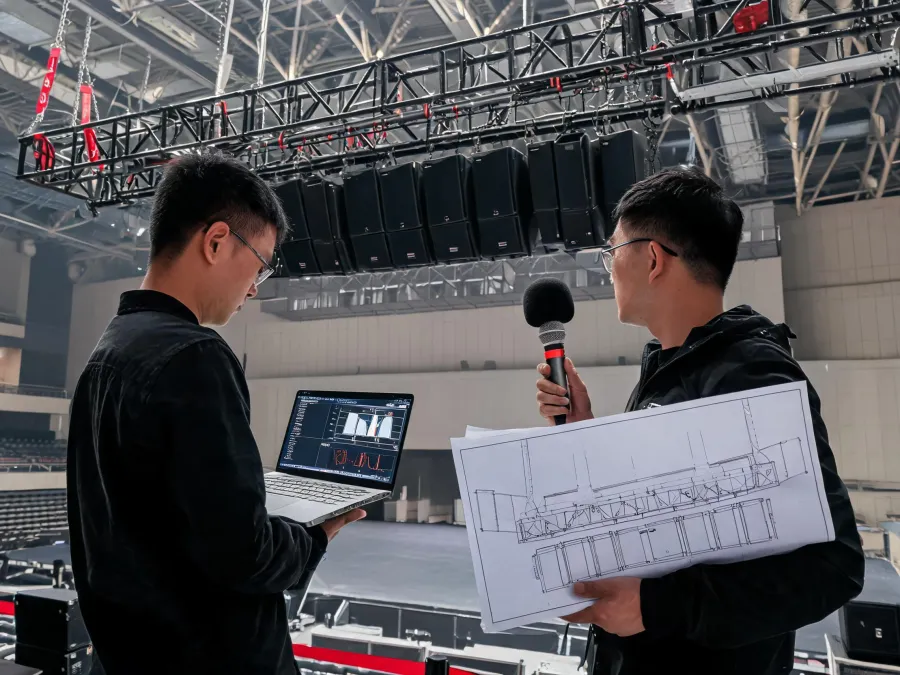
Audio engineers commissioning a loudspeaker system
Model → configure → measure → hand over
Four connected disciplines

Support is strongest when every handoff preserves the design intent

These workstreams may be delivered by different specialists, yet the inputs and assumptions should remain visible across the project.

01

Application definition

Document audience boundaries, program material, maximum and typical level, intelligibility priorities, architectural restrictions and the operator's normal working pattern. A drawing without this operational context is incomplete.
02

Acoustic prediction

Translate the room into coverage planes, examine direct-to-reverberant behaviour and test array geometry. Prediction is a comparative design tool; its results depend on dimensional accuracy and declared surface assumptions.

03

Mechanical and signal review

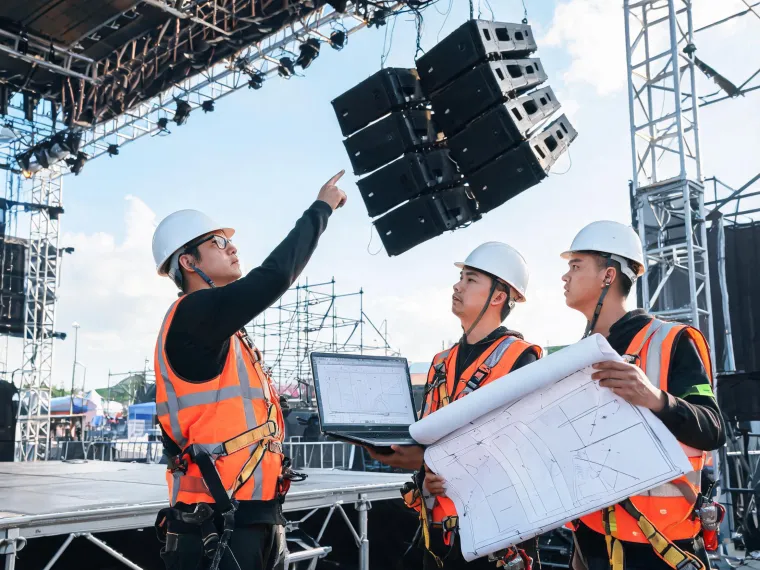
Check rigging loads with qualified parties, then align amplifier channels, processing paths, cable routes and network topology with the proposed loudspeaker configuration. Acoustic and mechanical drawings must agree.

04

Commissioning and handover

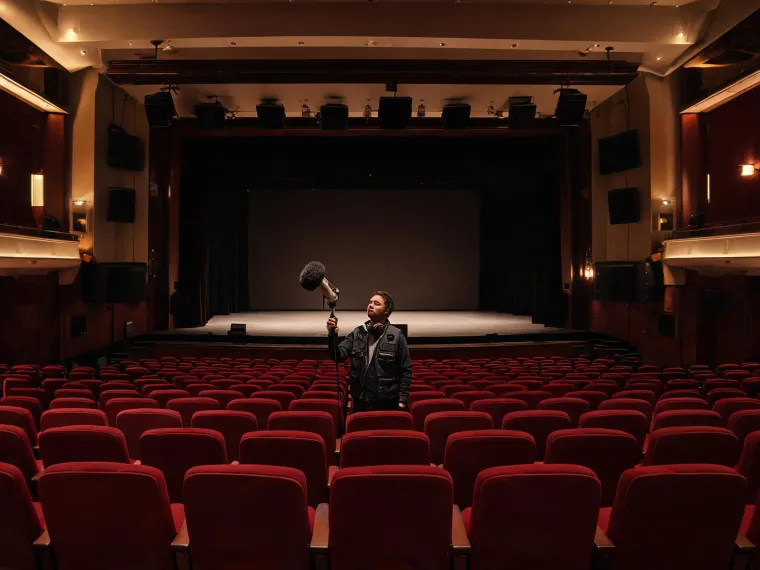
Verify polarity, gain structure, coverage and limiting under documented conditions. Store system files, identify access permissions and leave operators with a recovery path that does not depend on one individual.

Touring loudspeaker deployment review
Case pattern A / touring

When repeatability matters more than a perfect empty-room trace

Background: A touring package must move through different stages, roof limits and audience depths. The design team starts from repeatable array families and identifies which parameters may change at each venue.

Process: Standard prediction templates, weight summaries and amplifier files are prepared before the route. On site, the engineer verifies trim, splay, polarity and representative listening positions, recording exceptions rather than silently changing the master configuration.

Result: The practical outcome is a traceable show file and shorter fault isolation. It does not remove venue variation; it makes those variations explicit for the next deployment.

Fixed venue commissioning measurement
Case pattern B / fixed venue

When the system must work for operators with different experience levels

Background: A multipurpose auditorium alternates between speech, amplified music and visiting productions. Access, preset design and fault reporting become part of acoustic usability.

Process: Commissioning separates physical verification from tonal preference. The team checks wiring and polarity, measures representative zones, validates limiter behaviour and then auditions program-specific voicing with stakeholders.

Result: Handover includes named presets, protected settings and a concise restart sequence. This reduces accidental drift while leaving authorised engineers a documented route to deeper control.

6brief inputs before modelling
4verification stages on site
3handover file groups
0undocumented overrides as a goal
Scope the next conversation

Send the geometry and operating brief before requesting a final system list

Early information may be approximate. Label dimensions, audience areas and rigging data by confidence level so the design team can distinguish a placeholder from a verified constraint.

  • Room drawing or measured length, width and height
  • Audience plan with standing and seated zones
  • Maximum trim, structural points and access restrictions
  • Program use, target level and handover date

Request project support